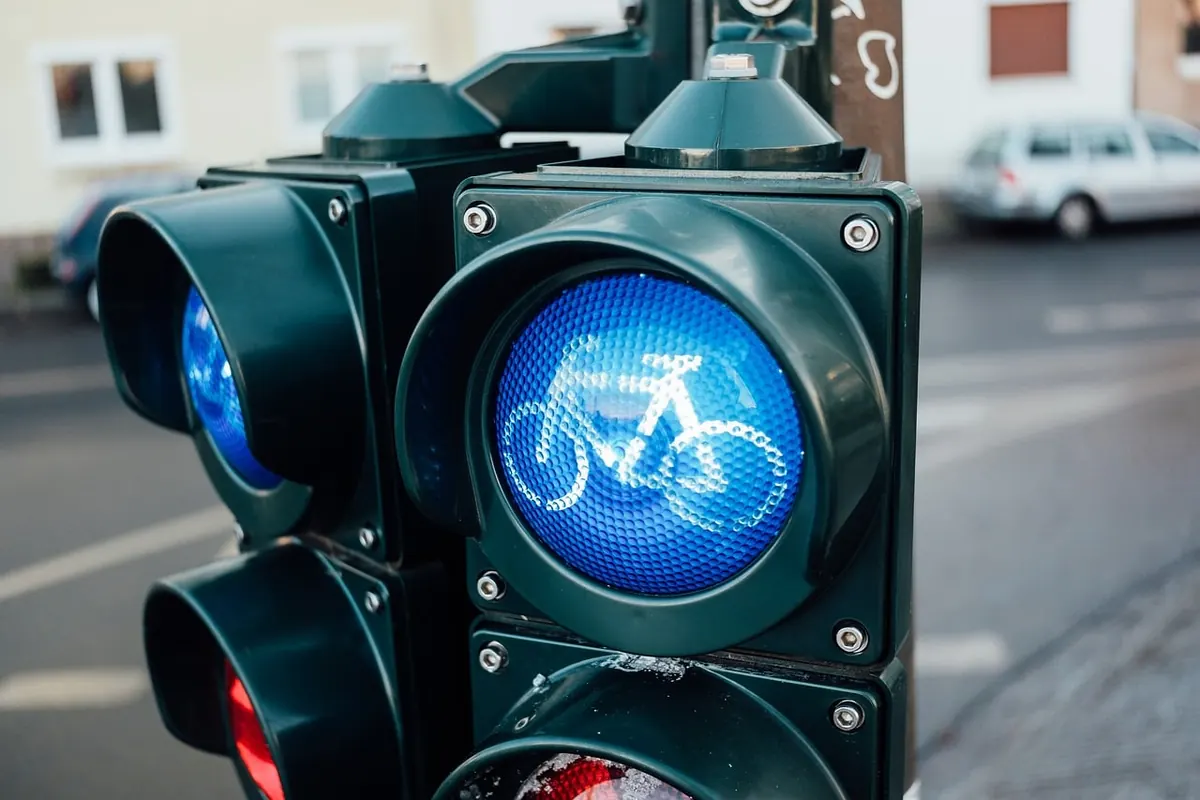
Drive down Main Street at 5:20 on a Tuesday and you can watch the whole argument happen in about ninety seconds. A cyclist swings out around a parked delivery van, a driver brakes hard, someone honks, and the line of cars behind both waits through another light cycle. Nobody in that scene is reckless. They are using the same thirty feet of asphalt with different expectations.
Two Ridge residents have spent the past month making opposite cases about what to do next: add bike lanes through downtown, or leave the street alone. The disagreement isn't really about bicycles. It's about safety, parking, money, and how traffic moves. Here is the strongest version of each side.
The case for lanes points to the block in front of the library, where the street narrows and parked cars line both curbs. A rider there has two choices: take the lane and hold up traffic, or hug the doors of parked cars and hope nobody opens one. A marked lane at least tells everyone where the rider will be. Protected lanes, with a buffer of paint and posts or a row of parked cars between rider and traffic, separate the two kinds of movement instead of just labeling it.
Opponents answer that a stripe of paint changes nothing about behavior. They also raise what cyclists rarely mention: the sidewalk. Riders who don't feel safe on Main Street currently ride on the sidewalk, which puts them in conflict with people walking, kids on scooters, and anyone leaving a shop with an armful of groceries. The safety question isn't only about cars hitting bikes. It's about where a nervous rider goes instead.
Storefront owners on the four blocks between the bridge and the square say the same thing: parking is the business. Their customers arrive by car, park within sight of the door, run in for ten minutes, and leave. Take away spaces and those ten-minute trips go somewhere else. That is a fair concern, and it isn't solved by telling people to park two streets over.
But how long each space sits full matters more than how many exist. If one car occupies the spot in front of the bakery from 7 a.m. to 3 p.m., that is one customer. If that spot turns over six times, that is six. A short time limit, properly enforced, often frees up more usable parking than a bike lane ever removes. A corral holding eight bikes takes roughly one car space. Converting four spaces for bike parking is a trade worth discussing; losing an entire block is a different conversation.
The cheap version of this project is paint: a striped lane, stencils, a few signs, paid for out of an ordinary street maintenance line. The expensive version includes repaving, curb work, bollards or planters, drainage changes, and new equipment for snow removal and street sweeping. Maintenance is the part that gets left out of public meetings and shows up in the budget three years later.
Lane supporters counter that Ridge is already paying for this street either way. A patched surface and faded crosswalk paint in front of the school carry their own cost, in repairs that get pricier the longer they wait. If repaving is scheduled anyway, restriping it differently adds comparatively little. That decision point may arrive before the debate does.
Downtown Ridge has two complications for any restriping: delivery trucks and morning school traffic. A truck stopped mid-block at the hardware store already blocks a lane for ten minutes at a time. Remove a travel lane and the backup reaches around the corner. This is the opponents' strongest point, and it can't be waved away.
The other side notes that backup happens now, at the same hour, from the same delivery, and that the fix, a marked loading zone or deliveries moved before 9 a.m., is worth doing regardless of bike lanes. They also argue that narrower lanes slow traffic, and that slower traffic on a street with storefronts, crosswalks, and a crossing guard is not automatically a bad outcome.
Both positions have a version that could pass a town meeting. Something like this:
That last item matters most and gets skipped most often. A pilot with a sunset date and honest numbers is reversible. A permanent project argued from conviction alone is not.
Public comment goes better when it's specific. A few approaches that tend to work:
Whichever way you lean, the useful question isn't whether Ridge likes bicycles. It's whether a specific block, at specific hours, with specific numbers, gets better or worse. That is a question this town can actually answer.
Photo: viarami / Pixabay

A practical pre-winter checklist for Ridge homeowners: gutters and ice dams, pipe protection, heating tune-ups, snow...

A practical comparison of Ridge Restaurant Week menus, price tiers, reservation odds, and dietary options, plus a...
Planning a Ridge block party? Here’s how to handle permits, road closures, insurance, and a simple timeline that...

Local news and voices from the ridge.
